
Challenge
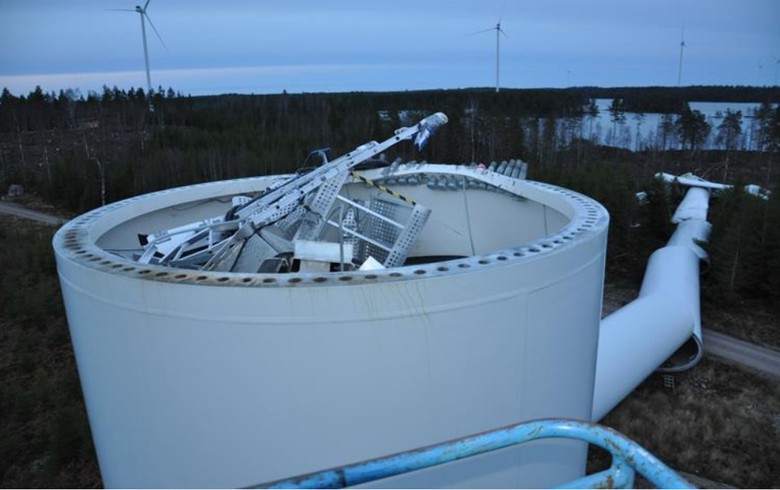
Bolt inspection is the costliest planned maintenance activity for wind farms, consuming approximately 30% of the annual maintenance budget. Despite regular inspection, there are still bolting failures on blade, drivetrain and foundation connections which at best can cause unplanned downtime and at worst, leads to catastrophic failure of the turbine.
On top of this, bolt inspection presents significant health & safety risks for technicians as a result of using heavy and cumbersome equipment, and working at height. Some Operators have reported that almost 5% of technicians will have an accident or near-miss every year.
The challenging bolted connections in the Wind industry include:
Solution
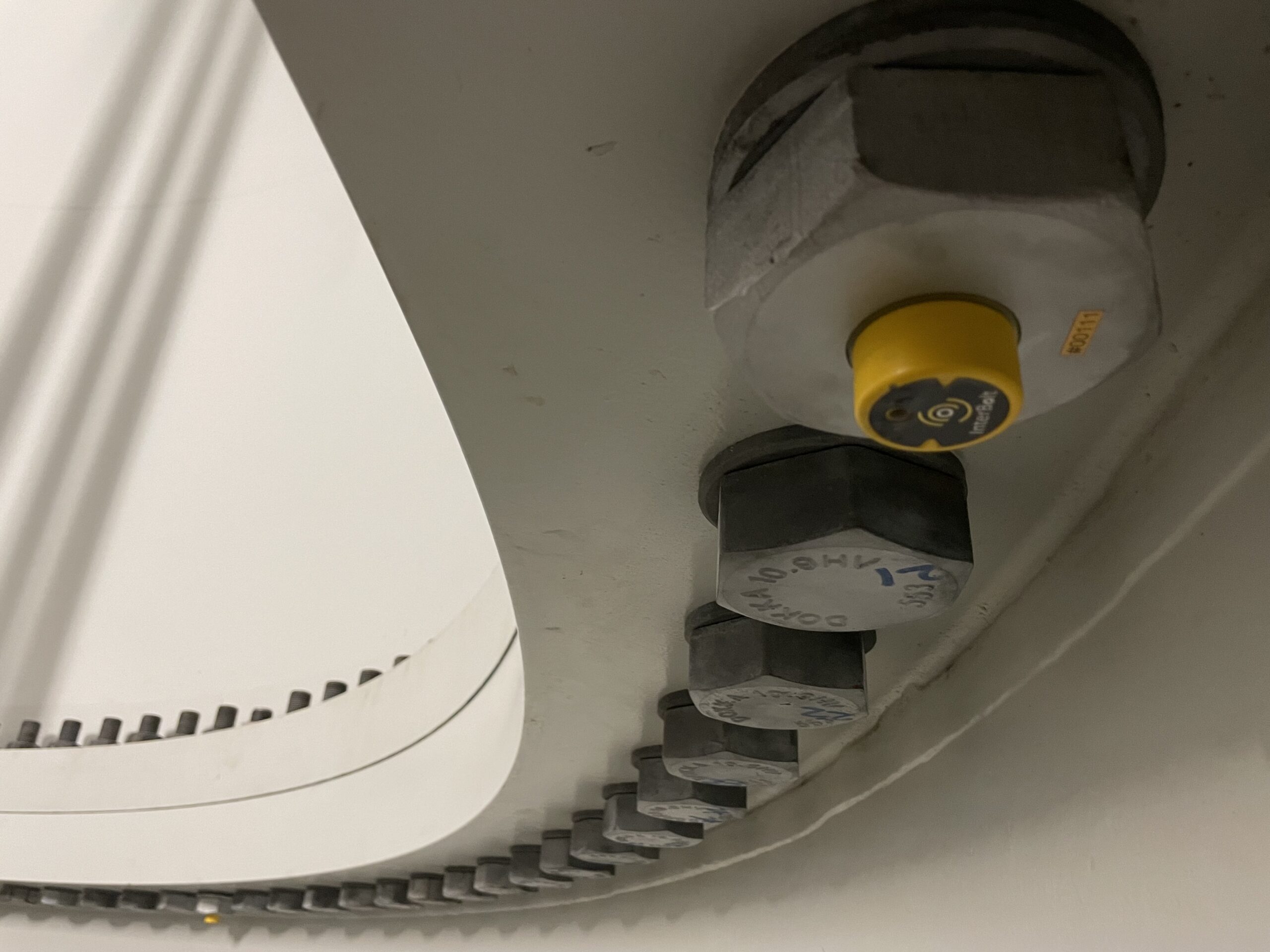
Through the deployment of InterBolt technology, Operators will have access to bolt load measurements remotely through the InterBolt Cloud platform. When a loose bolt is detected, an alert will be generated and the Operator can take the appropriate action to ensure the fault is rectified in the most cost efficient manner whilst still ensuring the asset operates reliably.
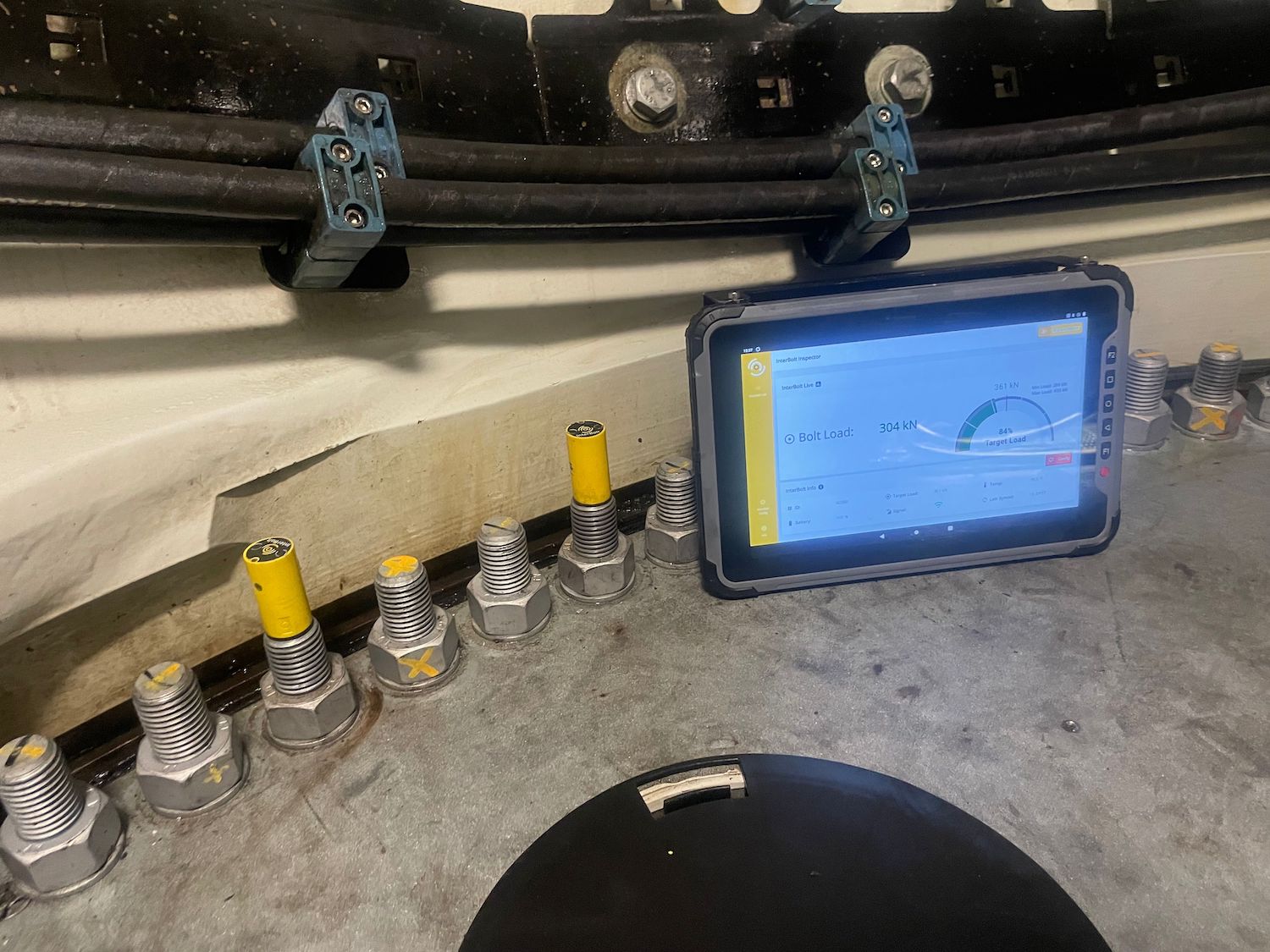
When technicians need to install bolts or retighten them, they can use the onsite monitoring functionality of InterBolt to quickly verify the bolt load. This means technicians don’t need to transport and use heavy and cumbersome equipment which reduces H&S risks.
Whilst a typical turbine will have up to 1000 critical bolted connections, a 10-20% roll out of InterBolt technology gives a sufficient dataset for Operators to implement a risk-based maintenance regime.
Value
Through adopting the InterBolt solution, Operators can eliminate the need for periodic manual inspection of bolted connection on wind turbines. This can:
-

Reduce bolt inspection costs by up to 90%, significantly reducing the cost of delivering wind energy.
-
Minimise H&S risks for technicians through reducing onsite work and removing the need for using heavy and cumbersome equipment to check bolt tightness.
-
Eliminate the need for asset downtime for bolt inspection, minimising lost production costs.

On top of this, InterBolt can be used to accelerate the validation of new designs and investigate bolting failures. This includes:
Use Case – Blade bolting
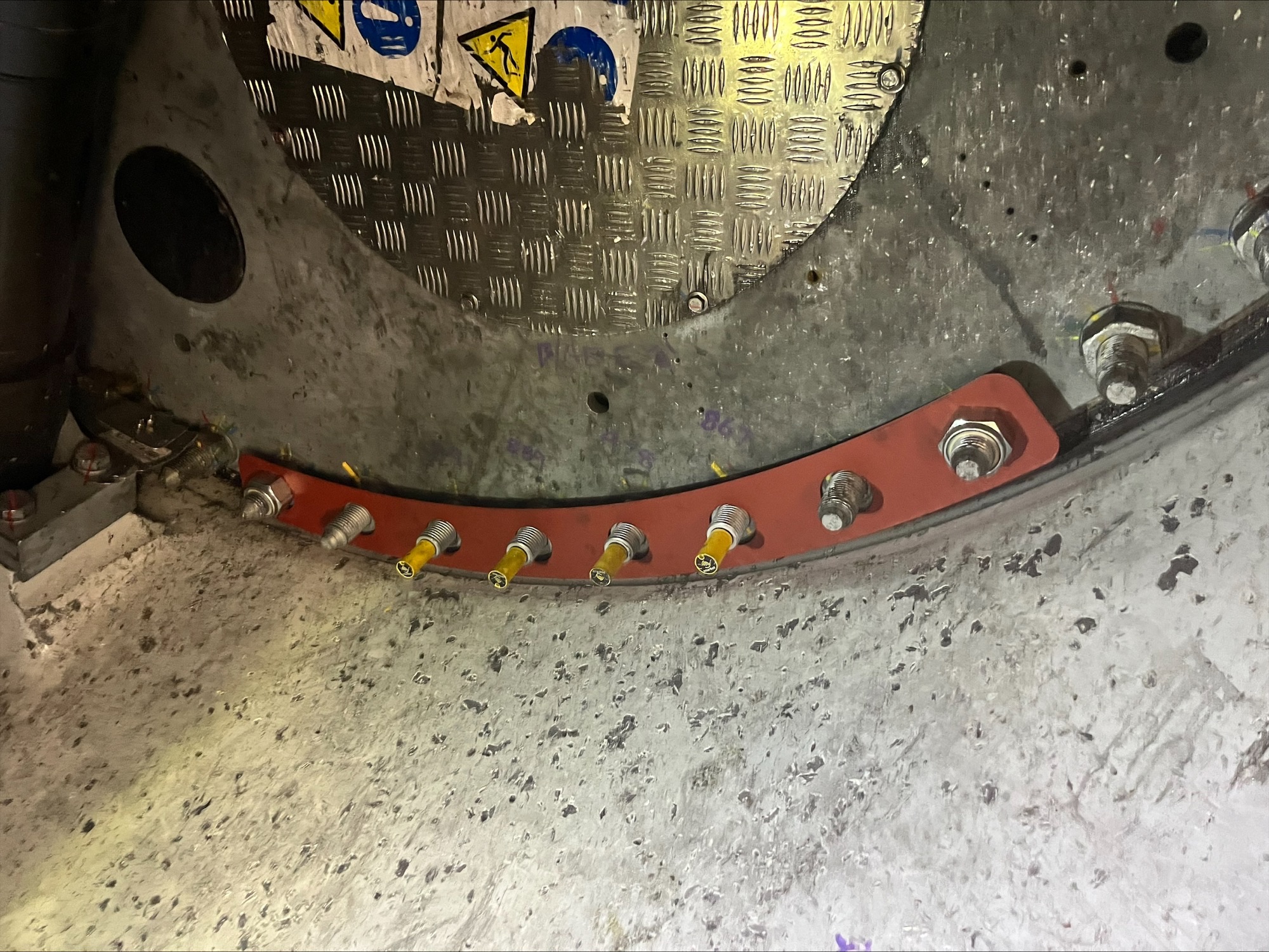
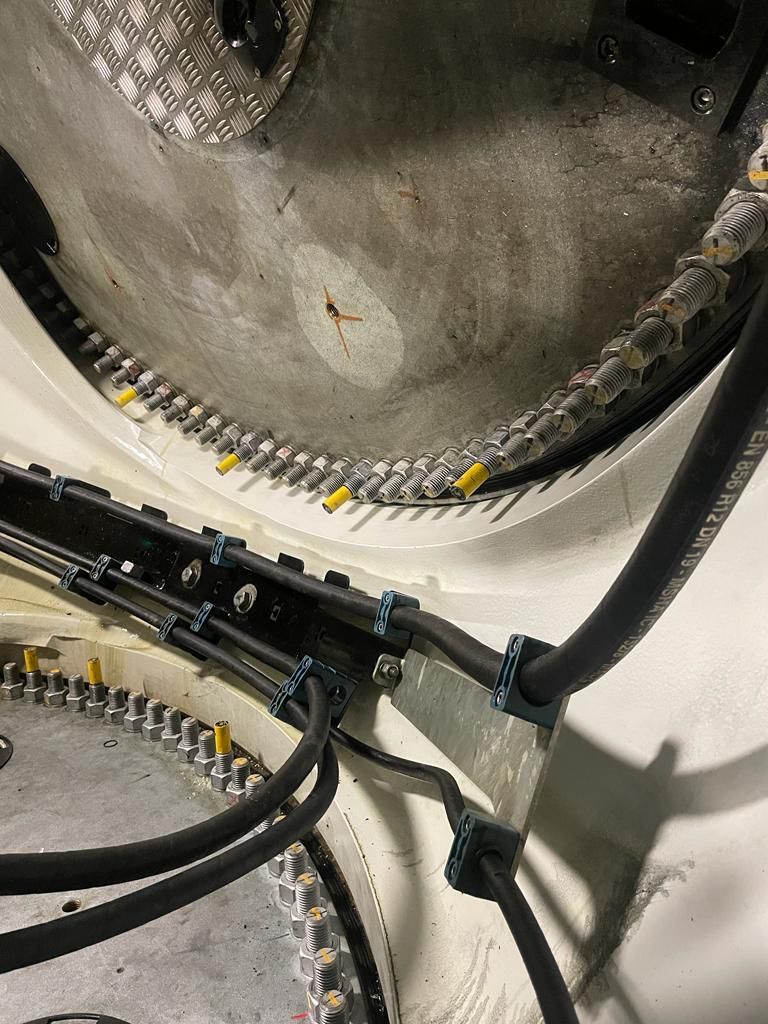
InterBolt is widely deployed on blade-to-blade bearing connections on Siemens, Senvion and GE turbines in the UK and North America.
With the remote monitoring and alert generation capabilities of InterBolt, fatigue failures can be predicted several weeks before they occur, enabling Operators to conduct preventative maintenance before bolt breakage occurs. This eliminates studs damaging hub components, unplanned downtime and subsequent lost production costs.
The dynamic load monitoring functionality of InterBolt is widely used in this application to measure the cyclic loading in the blade connection, particularly at the leading and trailing edges areas of the flange. With this feature, different installation regimes which eliminate fatigue failures have been developed and validated.
Use Case – Blade root inserts
There have been several cases of ‘blade liberation’ due to failed blade root inserts. These failures are internal to the laminate so it is virtually impossible to inspect through visual means.
InterBolt has been deployed at several wind farms to detect loose blade root inserts. When the insert fails, it is effectively disconnected from the blade so does not see any proportion of the working load as the turbine rotates. Through monitoring the dynamic loading of the blade studs, InterBolt is able to measure this reduction in cyclic loading, thereby being able to detect loose root inserts.
InterBolt is significantly more sensitive than traditional gap measurement approaches at detecting this failure mode and can identify individual blade insert failures which may not generate a gap.
Use Case – Main shaft to hub
Loss of drive due to studs failing on the main shaft to hub connection is common on some wind farms.
InterBolt installations have found that a significant proportion of the bolted connections are overtightened at installation, yielding the bolts and reducing their operational life. With InterBolt, the bolts can be accurately and repeatably tightened using the LED indicators and/or the InterBolt Tablet.
Secondly, installations have shown that these connections suffer from high settling and embedding losses. When a significant proportion of the preload is lost, they suffer from high cyclic loading and shear loading, ultimately leading to failure. InterBolt provides early detection of loss of preload so retightening can be performed before failure occurs.


Use Case – Main frame bolting
Several bolting failures have been recorded on main frame to generator bolted connections. This leads to risks of dropped objects (studs falling from height) and risks of structural integrity. The connection is typically torque tightened and there is no method of verifying whether the correct bolt load is being achieved at installation or whether there is significant cyclic loading occurring during operation.
InterBolt installations have identified that the existing installation process results in a low bolt load due to the challenges in controlling friction in ageing turbines. The dynamic load monitoring capabilities of InterBolt have shown that the low bolt load results in high cyclic loading, increasing the risk of fatigue failure.
The InterBolt team have worked closely with several Operators and utilised the InterBolt technology to identify a more suitable installation procedure. Long term monitoring of bolt load has validated the revised installation procedure, ensuring a more consistent bolt load and negligible cyclic loading.
Use Case – Tower bolting
As part of a funded project through the Offshore Wind Growth Partnership (https://owgp.org.uk/), the largest deployment of bolt load monitoring technology was deployed on the OREC Levenmouth Demonstration Turbine. This included both the M72 lower and M64 middle tower flanges.
Using the embedded LEDs on the InterBolts and the InterBolt Tablet, the technicians were able to confirm that they tightened the bolts to a correct preload. The need for the typical 500hr check back was then eliminated because technicians were able to confirm minimal preload losses through the InterBolt Cloud platform. More details on this project are provided in the below video.