
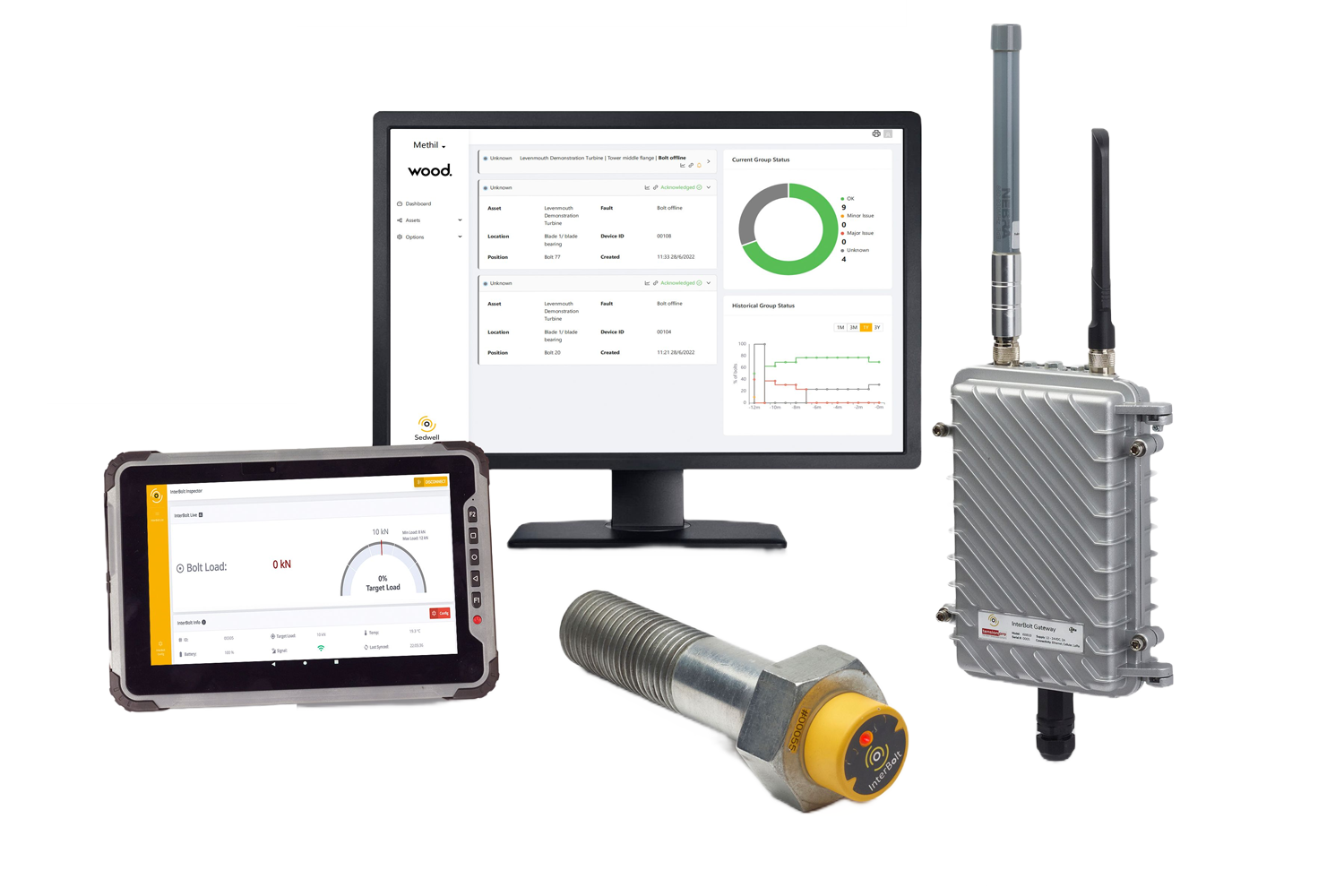
Our InterBolt technology enables you to measure the preload in bolted connections both onsite and remotely. This ensures bolts are tightened accurately onsite, eliminates the need for manual periodic inspection and enables asset failures to be predicted and prevented.

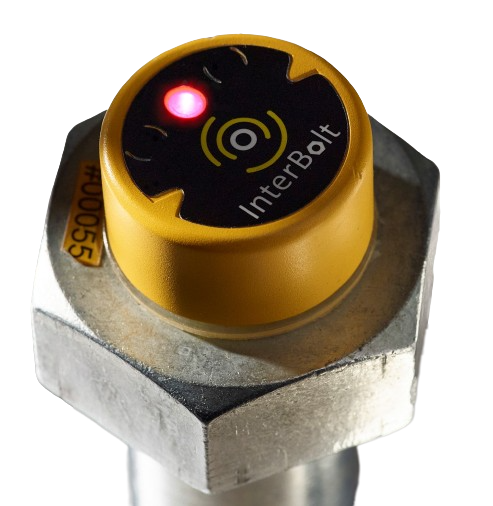
InterBolt technology
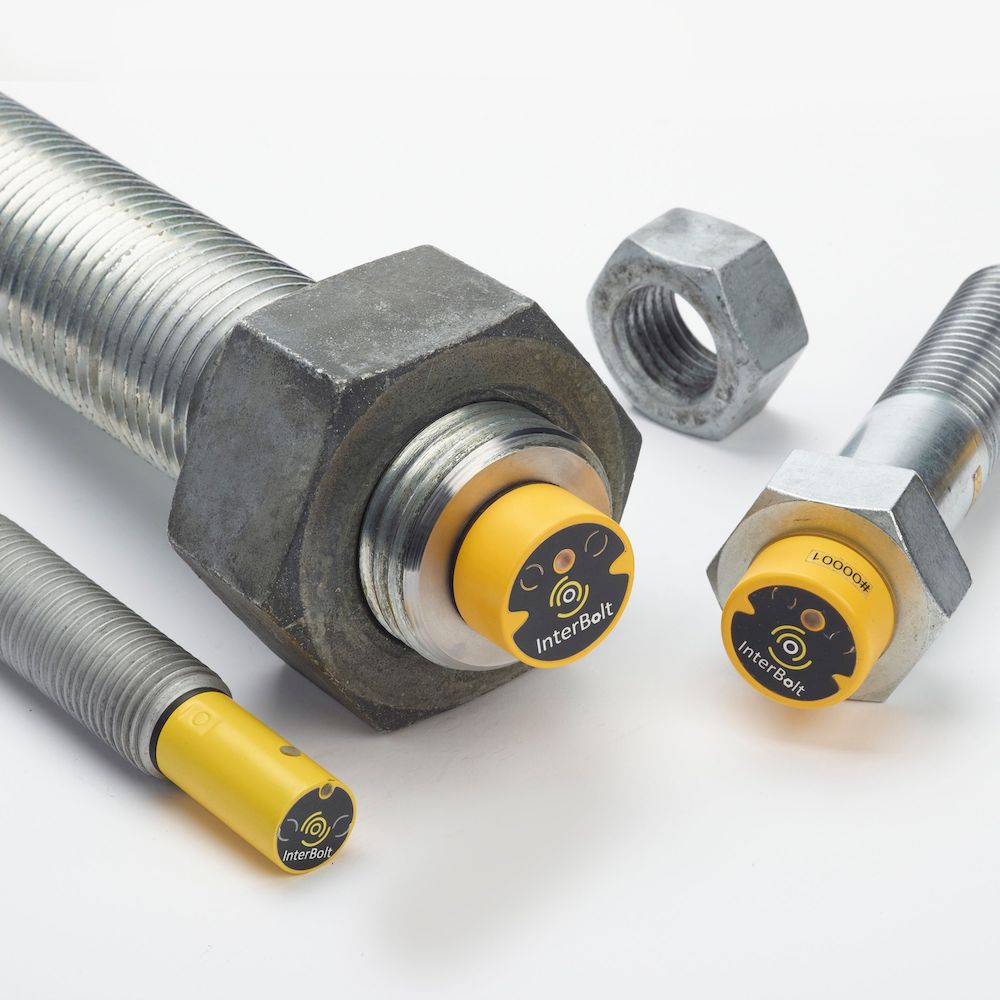
InterBolt is a miniature, high accuracy and low-cost bolt load sensor embedded into a bolt or stud. The wireless, battery operated device enables bolt load to be measured both onsite and remotely.
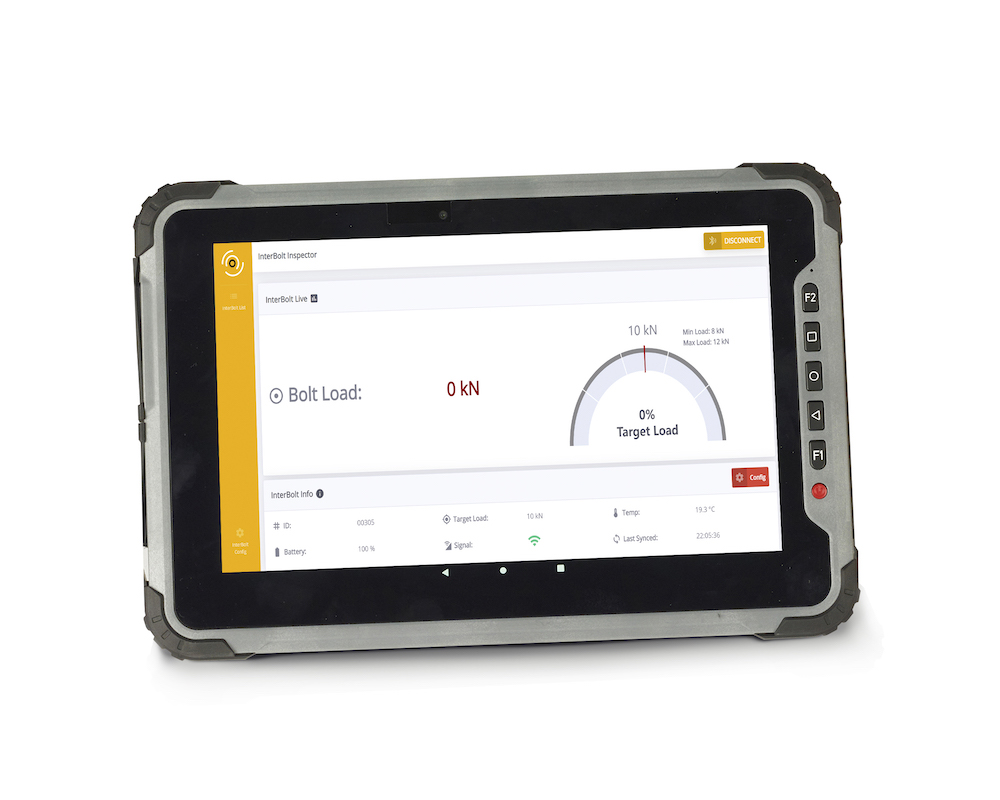
Onsite Monitoring
To quickly verify bolt load, InterBolt provides two methods for monitoring bolt load onsite: inbuilt LED indicators on the InterBolt end cap and through wireless connectivity to the InterBolt Tablet App.
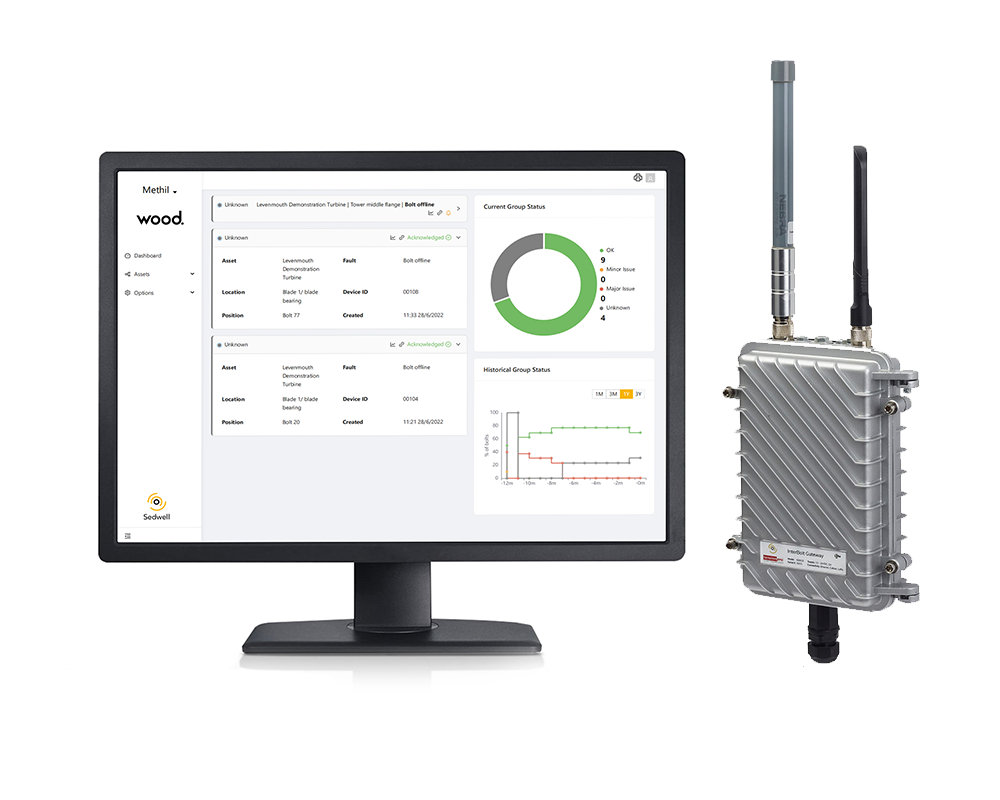
Remote Monitoring
To eliminate the need for bolts to be periodically inspected on site, bolt load measurements from InterBolt can be remotely monitored, in real-time with no technicians on site.
Why implement bolt load monitoring?

Ensure bolts are tightened correctly.
The safe and reliable operation of many assets requires that the bolted connections are tightened to provide a specified preload. Monitoring bolt load on site during and after tightening, ensures that bolts are tightened accurately and repeatably.
Predict and prevent asset failure.
Conventional maintenance regimes, using time-based approaches and torque/ tension tools, have an inherent delay in identifying a failed bolted connection and often do not provide accurate long-term data that can predict a degrading bolted connection. Remote bolt load monitoring provides the continuous data which can predict bolt failure, enabling preventative maintenance to be conducted.
Eliminate the need for periodic inspection.
Checking the tightness of bolted connections typically requires manual tools (torque, tensioning or ultrasonics equipment) operated by on-site technicians. Remote bolt load monitoring eliminates this requirement, significantly reducing the cost, asset downtime and health & safety risks associated with bolt inspection.
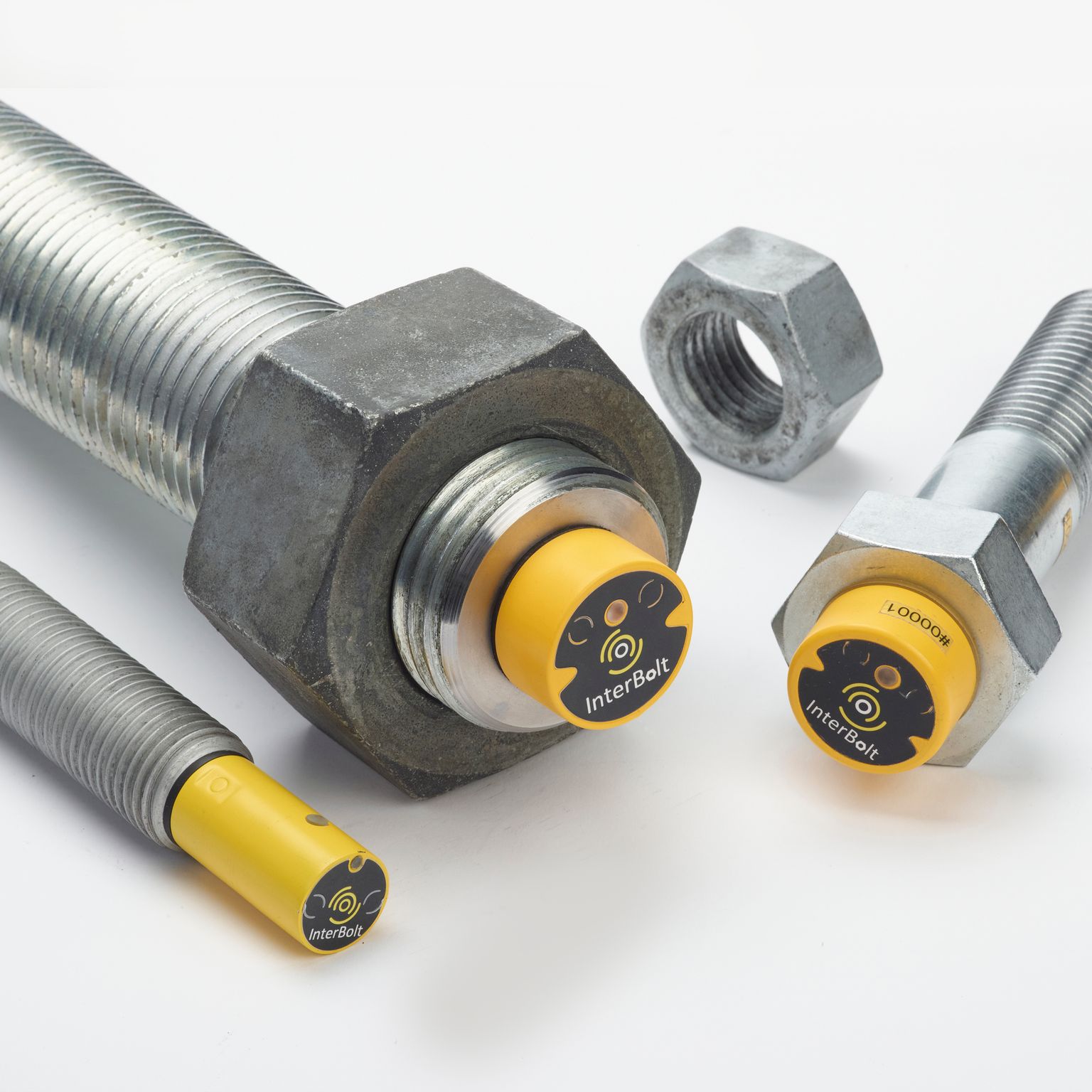
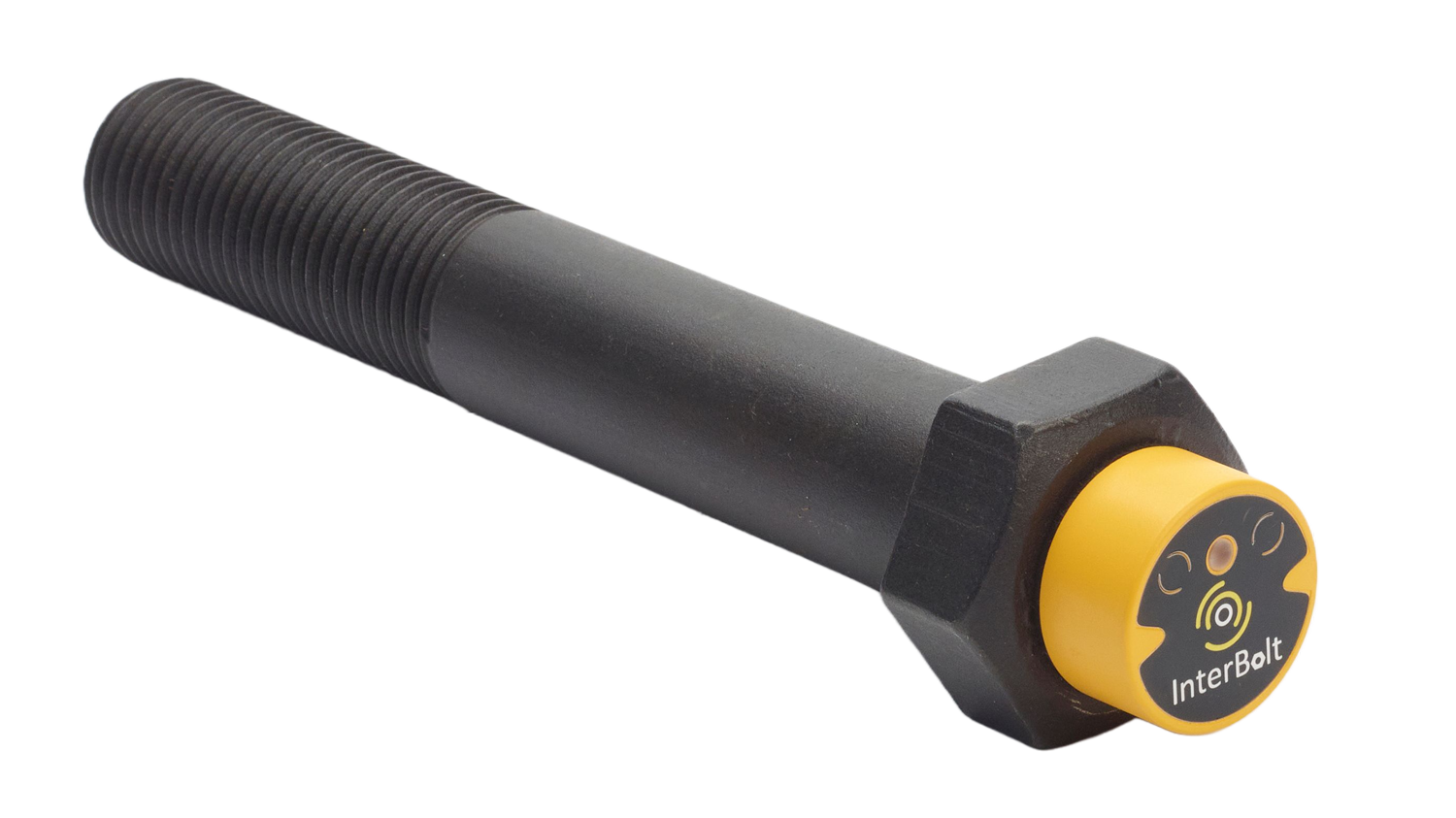
Inbuilt LED indicator for simple verification of bolt load on site.
LoRa wireless communications to transmit data to the InterBolt tablet for onsite monitoring and InterBolt Gateway for remote monitoring.
Calibrated, high accuracy bolt load sensor.
Battery to power InterBolt for up to 15 years.
Temperature sensor for correlating changes in bolt load with thermal expansion/ contraction of bolted connection.
How Does it Work?
InterBolt measures bolt load by tracking fastener elongation under tension.
A bolt behaves like a spring - it stretches slightly when tightened, creating the clamping force that holds a joint together. InterBolt’s embedded sensor uses a gauge pin principle to measure this elongation and convert it into an accurate bolt load (clamping force) reading.
Each InterBolt is factory-calibrated across its full load and temperature range, eliminating the need for on-site calibration. The sensor is unaffected by changes in effective length, making it suitable for both bolts and studs—an exclusive feature of the InterBolt system.
Any Bolt, Any Stud, Any Industry
InterBolt's stress and torque monitoring system is available in a wide range of bolts and studs. Whilst it is typically applied to large diameter fasteners – M16 or 5/8’’ and bigger, the technology has been applied to bolt diameters down to M10.
InterBolt is often embedded into free-issued bolts from our customers but InterBolt can also supply the fasteners through approved European suppliers.
Frequently Asked Questions
InterBolt has undergone rigorous testing to confirm its robustness. This includes:
- Ingress protection to IP68
- Impact testing to IK07
- Vibration and shock testing to 1000g
- Salinity testing (Salt spray 2000hrs)
- Temperature (-40 to 85 degC). High temperature InterBolt version available with operating temperature range up to 125 degC.
- Humidity (up to 100%)
- Pressure to 10 bar